Celebrating Canyons, Gorges, and Ravine Landforms with a Journey Through Earth’s Geological Wonders
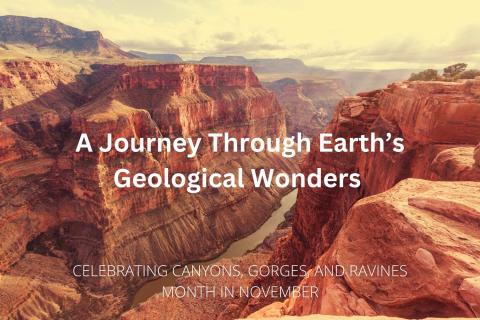
Celebrating Canyons, Gorges, and Ravines Landforms Month in November
November is canyons, gorges, and ravines landforms month and it is the perfect month to celebrate one of nature's most awe-inspiring creations. These landforms, shaped over millennia by the forces of water, wind, and time, offer some of the most spectacular views on Earth.
As a travel blogger, I’ve had the privilege of exploring some of the most famous canyons and gorges from around the world, and I’m excited to take you on a journey through the United States, South America, Europe, Asia, Africa, Australia, and the South Pacific. Each region offers its own unique geological wonders, and I’m here to share my experiences and tips for exploring these iconic locations.
United States & North America
A Canyon Lover’s Dream
The U.S. is home to some of the most famous canyons and gorges on the planet. From the Grand Canyon to the winding rivers of the Pacific Northwest, these locations are must-visits for nature lovers.
Grand Canyon (Arizona, USA)
Best Known For: Vastness and geological significance
The Grand Canyon needs no introduction—it’s one of the most iconic landscapes on Earth. The sheer scale and geological beauty of the Grand Canyon, carved by the Colorado River over millions of years, make it a once-in-a-lifetime experience. I’ve spent hours just gazing at the dramatic cliffs and the vibrant colors that shift with the sunlight.
Tip for Exploring: Hike the South Kaibab Trail for unbeatable panoramic views, or take a rafting trip down the Colorado River to truly experience the canyon from below.
Antelope Canyon (Arizona, USA)
Best Known For: Narrow passageways and light beams
Antelope Canyon is a photographer’s paradise. This slot canyon, with its twisting, narrow passageways, is known for the mesmerizing light beams that shine through the openings above. It’s a place where sunlight dances on the walls, creating beautiful plays of color.
Tip for Exploring: Book a guided tour to fully experience the canyon’s beauty and ensure you’re at the right spot for the perfect light beams, especially in the late morning or early afternoon.
Bryce Canyon (Utah, USA)
Best Known For: Hoodoos and stunning rock formations
Bryce Canyon is famous for its hoodoos, those towering spires of rock that dot the landscape. The colors in the canyon are especially vibrant at sunrise and sunset, with pinks, oranges, and reds lighting up the sky.
Tip for Exploring: The Navajo Loop trail is a great way to see some of the best hoodoos up close, and the Bryce Amphitheater offers breathtaking views.
Copper Canyon (Chihuahua, Mexico)
Best Known For: Scenic train ride and vast, rugged terrain
The Copper Canyon system in northern Mexico is a collection of six canyons larger and deeper than the Grand Canyon. It’s less known, but equally impressive. You can ride the famous Chihuahua al Pacífico train through the canyon, offering stunning views of the surrounding terrain.
Tip for Exploring: Take the Chepe Express train from Chihuahua to Los Mochis for a truly scenic and relaxing journey through the mountains.
The Columbia River Gorge (Oregon, USA)
Best Known For: Waterfalls and dramatic river views
The Columbia River Gorge is a spectacular canyon carved by the Columbia River. The gorge is home to dozens of stunning waterfalls, including the famous Multnomah Falls. The area offers incredible hiking, beautiful views, and the chance to explore the lush landscapes of the Pacific Northwest.
Tip for Exploring: Hike to Multnomah Falls via the Multnomah Falls Trail, or visit Vista House for panoramic views of the gorge and river below.
South America: Wonders of the Andes and Beyond
South America is home to some truly breathtaking canyons and ravines, from the arid landscapes of the Andes to the lush jungles of Brazil.
Colca Canyon (Peru)
Best Known For: The Andean condor and incredible depth
Colca Canyon is one of the deepest canyons in the world, nearly twice as deep as the Grand Canyon. It’s also home to the Andean condor, one of the largest flying birds on the planet.
Tip for Exploring: Hike down into the canyon to visit the Oasis de Sangalle, a lush spot perfect for a restful stop. Don’t forget to catch a glimpse of the Andean condor soaring high above the canyon.
The Canyon of the Lost (Chile)
Best Known For: Unique rock formations and remote desert landscape
The Canyon of the Lost (or Cañon del Diablo) is located in northern Chile and is famous for its dramatic rock formations. The canyon is particularly remote, offering a sense of isolation that makes it feel like you’re exploring a forgotten part of the Earth.
Tip for Exploring: Consider visiting with a local guide to help navigate the rugged terrain, and take time to marvel at the impressive geological formations.
Atuel Canyon (Argentina)
Best Known For: Vivid red and orange rock formations
Atuel Canyon in Argentina offers dramatic views of red sandstone cliffs, winding rivers, and small villages along the way. The colors of the canyon are especially vibrant at sunset.
Tip for Exploring: Take a scenic drive along Route 173, and stop at various viewpoints to snap photos of the vividly colored cliffs. You can also go rafting in the river below.
Rio Verde Canyon (Brazil)
Best Known For: Hidden waterfalls and emerald green waters
Located in the heart of Brazil, Rio Verde Canyon is a true gem. The canyon is home to lush vegetation, turquoise waters, and several stunning waterfalls.
Tip for Exploring: Bring a bathing suit and plan to hike the Rio Verde Trail, which leads you to some of the most beautiful waterfalls in the canyon. Be sure to take a dip in the crystal-clear waters.
La Garganta del Diablo (Argentina/Paraguay/Brazil)
Best Known For: The Devil’s Throat, part of Iguazu Falls
La Garganta del Diablo (The Devil’s Throat) is the most powerful section of Iguazu Falls, located at the border between Argentina, Brazil, and Paraguay. The roar of the water as it crashes down into the gorge is absolutely mesmerizing.
Tip for Exploring: Take a boat ride to get up close to the falls, or explore the surrounding Iguazu National Park for other stunning views.
Europe: Gorge-ous Landscapes and History
Europe is home to some of the oldest and most historically significant canyons and ravines, often intertwined with medieval castles and ancient ruins.
Verdon Gorge (France)
Best Known For: Stunning turquoise river and dramatic cliffs
The Verdon Gorge in southern France is one of Europe’s most beautiful canyons. The turquoise river winds through towering cliffs and lush landscapes, making it an excellent destination for hiking, kayaking, and photography.
Tip for Exploring: Hike the Sentier Blanc-Martel, one of the most popular trails, or rent a kayak to paddle along the river’s clear waters.
Bovec Gorge (Slovenia)
Best Known For: Crystal-clear rivers and rugged terrain
The Bovec Gorge in Slovenia is located in the stunning Triglav National Park. This narrow, deep gorge is carved by the Soča River, famous for its striking emerald waters.
Tip for Exploring: Hike along the gorge’s paths, or take a thrilling white-water rafting trip down the river for an adrenaline-filled adventure.
Samaria Gorge (Greece)
Best Known For: Hiking and breathtaking mountain views
The Samaria Gorge on Crete is one of Europe’s most famous hiking destinations. The gorge is located in the heart of Samaria National Park and offers stunning views of the White Mountains.
Tip for Exploring: Be prepared for a long, rugged hike—about 16 kilometers! It’s one of the most popular hikes in Greece, so try to go early to beat the crowds.
Garganta de Cares (Spain)
Best Known For: Impressive canyon carved by a river
The Garganta de Cares, located in the Picos de Europa in Spain, is a dramatic gorge carved by the Cares River. The hike along the gorge is challenging but offers incredible views of cliffs and rock formations.
Tip for Exploring: Take the Cares Trail, one of the most famous hikes in Spain, which follows the river through the heart of the gorge.
The Rhine Gorge (Switzerland)
Best Known For: Switzerland’s "Grand Canyon"
The Rhine Gorge, also known as the Swiss Grand Canyon, is a spectacular, wide canyon carved by the Rhine River. It’s a beautiful place to explore by boat, hike, or even bike.
Tip for Exploring: Take the Ruins of Castle Falkenstein hike for stunning views, or take a boat ride along the river to experience the gorge from the water.
Asia, Africa, Australia, and the South Pacific
From the rugged landscapes of Asia to the remote wilderness of Australia and the South Pacific, each of these regions is home to some truly unique canyons, gorges, and ravines that are perfect for exploration. I haven't had the chance to explore these regions, but they are on my bucket list!
Asia
- Zhangjiajie Grand Canyon (China): Known for its glass bridge and towering cliffs.
- Tianzi Mountains (China): Famous for its “floating peaks” and deep ravines.
- Ladakh Gorge (India): A stunning high-altitude gorge with breathtaking views.
- The Three Gorges (China): Known for their dramatic cliffs and river cruises.
- Gorge of the Gods (India): A spiritual and scenic location near the Ganges.
Africa
- Fish River Canyon (Namibia): One of the largest canyons in the world.
- Blyde River Canyon (South Africa): A lush and scenic canyon with a subtropical climate.
- Todra Gorge (Morocco): Narrow, dramatic cliffs and a popular trekking destination.
- Blue Nile Gorge (Ethiopia): Known for its beauty and the Blue Nile Falls.
- Draa Gorge (Morocco): A stunning, palm-lined gorge in the desert.
Australia & South Pacific
- Grampians Gorges (Australia): A rugged national park with stunning ravines and waterfalls.
- Wellington Caves (Australia): Limestone caves and spectacular formations.
- Rangitoto Lava Caves (New Zealand): An amazing volcanic landscape.
- Waitomo Caves (New Zealand): Famous for its glowworms and stunning limestone formations.
- Tongariro National Park (New Zealand): Home to deep ravines and volcanic landscapes.
From the dramatic Grand Canyon to the tranquil Zhangjiajie Grand Canyon, November is the perfect time to appreciate these awe-inspiring landforms. Each canyon, gorge, and ravine is a testament to the power of natural forces, and exploring them offers not only breathtaking views but also a deeper connection to Earth’s history.

Celebrate