How Christmas has been Celebrated Across History
Christmas in Ancient Times
Pre-Christian Winter Solstice Festivals
Long before Christmas was celebrated, various ancient cultures held midwinter festivals. These events were often linked to the winter solstice, the shortest day of the year, symbolizing the "rebirth" of the sun and the promise of longer days ahead.
Saturnalia (Rome)
One of the most famous of these festivals was Saturnalia, a week-long Roman holiday in honor of Saturn, the god of agriculture. It featured feasts, gift-giving, role reversals (slaves would often be treated as equals), and lots of merrymaking. Houses were decorated with greenery, much like we do today.
Yule (Norse/Germanic)
In northern Europe, the Yule festival involved lighting fires, decorating with evergreens, and even burning a large log (the Yule log) to welcome the returning sun. Yule customs like the use of evergreens and candles persist in today’s Christmas celebrations.
Christian Adoption of December 25
By the 4th century, early Christians decided to observe December 25 as the day to celebrate the birth of Jesus Christ. Pope Julius I, who served as pope from 337 to 352 AD, is often credited with formalizing December 25 as the date for Christmas. The exact reason for the choice of this date remains uncertain, but it was likely an effort to Christianize popular pagan celebrations and create a festival for the birth of Christ that coincided with the end of the solstice festivities.
Christmas in the Middle Ages
Religious Celebrations
During the Middle Ages, Christmas was a deeply religious event, starting with a midnight mass on Christmas Eve to honor the birth of Christ. The religious aspect was central, with churches and cathedrals being focal points of celebration. Nativity plays became popular, retelling the story of Christ’s birth.
Festive Traditions
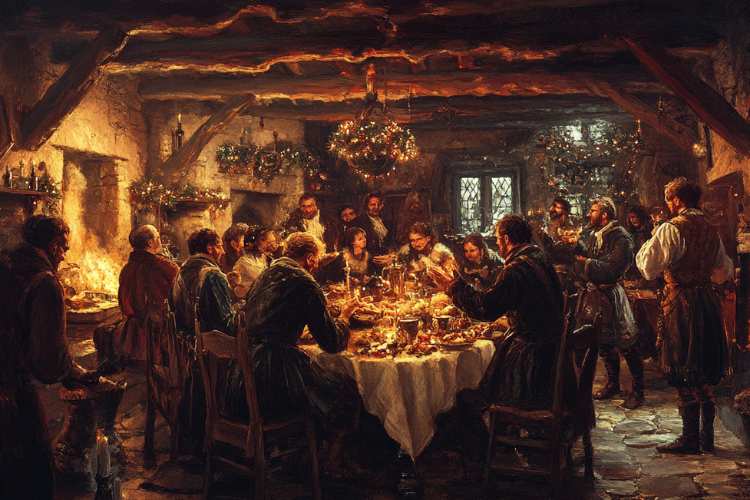
At the same time, many older pagan traditions were maintained or reinterpreted. For example, the practice of wassailing (singing carols to ensure good crops) became associated with Christmas. Feasts were central to the season, and Christmas became known as a time for grand banquets.
Feasting and Charity
Medieval Christmas celebrations included generous feasting, with dishes like roast boar and peacock. Lords and nobles would host lavish meals and sometimes distribute alms to the poor. "Misrule" was also common in some areas, where the social order was temporarily inverted, allowing for merriment and chaos.
Twelve Days of Christmas: Christmas celebrations extended over 12 days, from December 25 to January 6 (Epiphany), with revelry, games, and feasts taking place throughout this period.
Christmas in Early America
Puritan Disapproval
When the Puritans settled in New England in the 17th century, they rejected the celebration of Christmas, viewing it as a holiday with pagan roots and excessive revelry. They even banned Christmas in some colonies, considering it unbiblical. For Puritans, the idea of feasting and drinking in the name of religion was offensive. Christmas remained a low-key event in many parts of America for much of the colonial period.
Dutch Influence and Saint Nicholas
In contrast, in places like New York, settled by the Dutch, Sinterklaas (the Dutch version of Saint Nicholas) was celebrated, and he would eventually evolve into Santa Claus. Saint Nicholas was a gift-bringer, known for his kindness and generosity, especially toward children.
Christmas Revived in the 19th Century
When the war ended, the magazines and newspapers that had underlined the importance of the holiday kept promoting it, and reunited families, devastated by the losses of the war, kept cherishing it. In 1870, in the aftermath of the war, Congress passed the first federal holiday law and made Christmas an official holiday. Four years of war had changed the holiday from a loose celebration to an essential one.
By the early 19th century, Christmas started to regain popularity in America, thanks in part to the influence of European immigrants and British traditions. Then in 1870, in the aftermath of the Civil war, and realizing the need for a holiday that lifts and unites people even through the hardest of time, Congress passed a federal law making Christmas an official holiday.
Christmas was still celebrated by individual traditions, mostly of gathering with family, feasts and gift giving. Washington Irving and Charles Dickens helped to brand Christmas as a family-centric holiday through works like The Sketchbook of Geoffrey Crayon and A Christmas Carol, respectively. Dickens' tale emphasized charity, goodwill, and the Christmas spirit, helping reshape the holiday’s image into something more universally heartfelt.
Christmas in the Victorian Era
The Birth of Modern Traditions
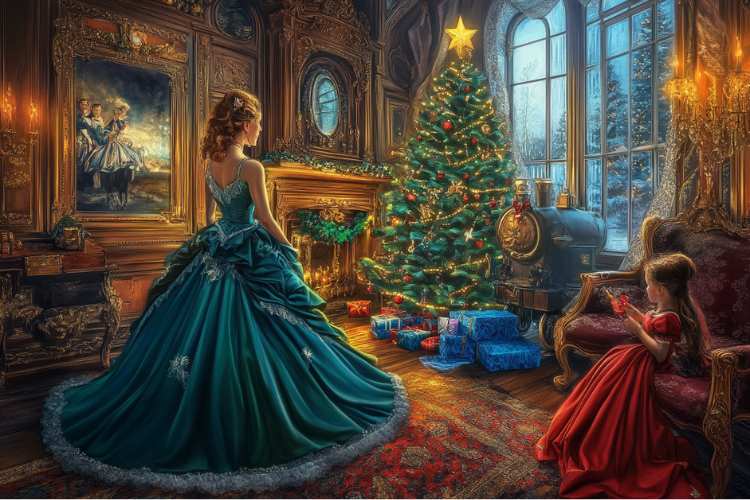
In the mid-19th century, Christmas underwent a major transformation. Queen Victoria and Prince Albert, of German descent, popularized the practice of decorating a Christmas tree in Britain, a custom that quickly spread to America.
Gift-Giving and Cards
Gift-giving, especially to children, became more widespread, along with the practice of sending Christmas cards. Christmas also became associated with children, family, and domestic celebration during this period.
Santa Claus
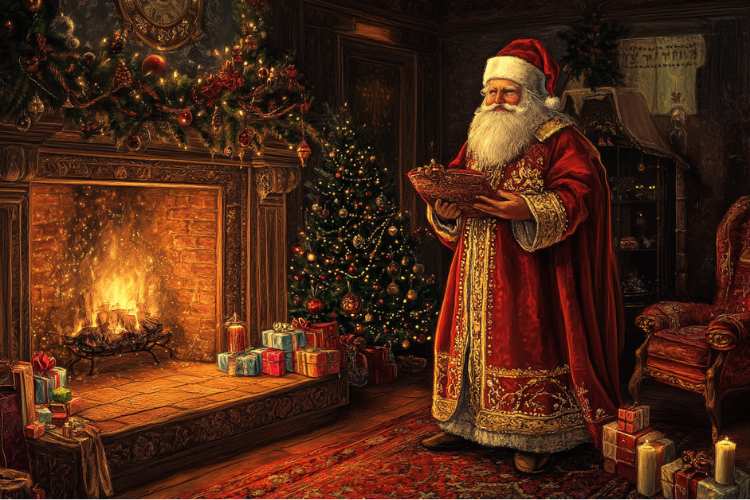
The image of Santa Claus began to take shape during this time. The figure we know today, with his red suit and white beard, was solidified in part by the famous poem A Visit from St. Nicholas (often known as ’Twas the Night Before Christmas), written in 1823.
Christmas in Modern Times
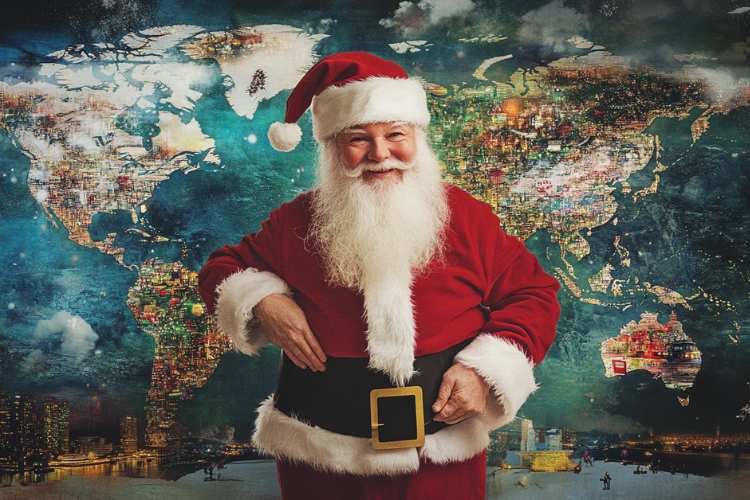
Global and Secular Celebration
Today, Christmas is celebrated around the world, both as a religious holiday and as a secular festival. For many, it has become more of a cultural event, where family gatherings, feasts, and gift exchanges take precedence over religious observance.
Decorations
The modern celebration includes bright and festive decorations, like Christmas trees, lights, wreaths, and ornaments. These are now commonplace not just in homes, but in public spaces, shopping malls, and city streets.
Commercialization
Christmas has also become heavily commercialized. In the weeks leading up to December 25, there’s a frenzy of shopping, both online and in stores. Black Friday and Cyber Monday mark the beginning of the Christmas shopping season, and advertisements featuring sales, special deals, and must-have gifts are everywhere.
Santa Claus
The figure of Santa Claus, delivering gifts to children worldwide, remains one of the most recognized symbols of Christmas. His role has expanded globally, and even non-Christian cultures have adopted the concept of a gift-giving figure during this time of year.
Modern Traditions
Beyond religious services, families today celebrate Christmas with feasts, gift exchanges, watching classic holiday movies, and baking festive treats. There’s also a strong emphasis on giving back, with many engaging in acts of charity or donating to causes during the holiday season.

Celebrate