Indigenous People's Day
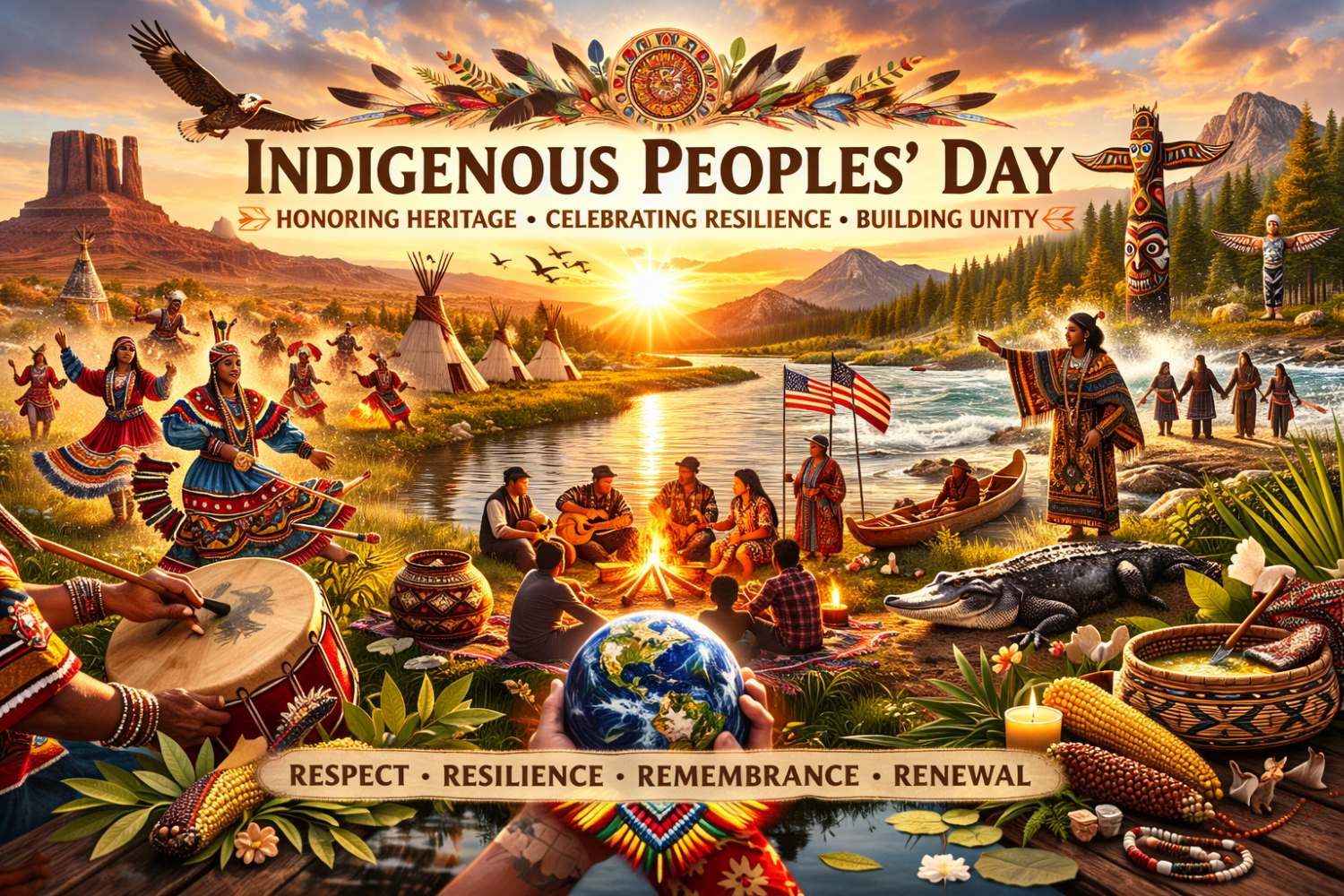
Every October, a growing number of cities, states, schools, and communities across the United States pause to recognize Indigenous Peoples’ Day, a day centered not on colonization, but on the original peoples of this land and their enduring cultures.
It’s a day rooted in truth, resilience, and recognition. And it’s reshaping how America understands its own story.
When Is It Observed?
Indigenous Peoples’ Day is observed on the second Monday in October, the same day as Columbus Day.
That placement is intentional. It invites reflection and reframes the national narrative asking who was here first, whose stories were overlooked, and how we move forward together.
How Indigenous Peoples’ Day Began
Indigenous Peoples’ Day emerged as an alternative to Columbus Day, a federal holiday established in 1937. For many Native communities, Columbus Day symbolized the beginning of colonization, displacement, disease, and centuries of injustice.
The modern movement began gaining traction in 1992, the 500th anniversary of Columbus’ arrival in the Americas. That year, Berkeley, California became one of the first U.S. cities to formally adopt Indigenous Peoples’ Day.
Since then, the movement has expanded significantly. Today, numerous states and hundreds of municipalities observe Indigenous Peoples’ Day in some form. In 2021, the President of the United States issued the first official presidential proclamation recognizing it at the federal level.
The shift isn’t about erasing history, it’s about broadening it.
Where it is Observed
States That Celebrate Indigenous Peoples’ Day (Instead of or Alongside Columbus Day)
This is actually one of the biggest cultural shifts happening in U.S. public observances right now. Across the country, Indigenous Peoples’ Day has increasingly replaced or joined Columbus Day, but how it’s observed varies widely by state and even by city.
Indigenous Peoples’ Day is observed on the second Monday in October, the same day as Columbus Day, but states handle it in three main ways:
1. Replaced Columbus Day entirely
2. Observed alongside Columbus Day
3. Recognized officially but not as a state holiday
1. States That Have Replaced Columbus Day with Indigenous Peoples’ Day
These states officially recognize Indigenous Peoples’ Day instead of Columbus Day:
-
Alaska
-
Hawaii (celebrates Discoverers’ Day, honoring Polynesian navigators rather than Columbus)
-
Maine
-
New Mexico
-
Oregon
-
South Dakota (since 1990, renamed Native American Day)
-
Vermont
In these states, state offices typically follow Indigenous-focused observances rather than Columbus commemorations.
2. States That Celebrate Both (Joint or Dual Recognition)
These states recognize Indigenous Peoples’ Day while Columbus Day remains on the books:
-
California
-
Colorado
-
District of Columbia
-
Illinois
-
Iowa
-
Louisiana
-
Michigan
-
Minnesota
-
Nevada
-
North Carolina
-
Virginia
-
Washington
-
Wisconsin
In practice, many government offices, schools, and cities emphasize Indigenous Peoples’ Day culturally even if Columbus Day still exists legally.
3. States with Recognition or Proclamations
These states acknowledge Indigenous Peoples’ Day through proclamations, education initiatives, or local adoption rather than statewide replacement:
-
Florida — no statewide holiday, but many cities, counties, universities, and tribal communities observe it.
-
Texas
-
Kansas
-
Kentucky
-
Montana
-
Oklahoma
-
Arizona
-
Utah
In Florida especially, observances often center around the cultures of the Seminole Tribe of Florida and the Miccosukee Tribe of Indians of Florida, with cultural education, museum programming, and heritage events.
Cities that Led the Movement
Even in states without official recognition, hundreds of cities celebrate Indigenous Peoples’ Day including:
-
Los Angeles
-
San Francisco
-
Seattle
-
Denver
-
Austin
-
Boston
-
Phoenix
-
Tampa & St. Petersburg (local observances)
Many Americans actually encounter the holiday first at the local level, not state government.
Why This Shift Matters
Supporters say the change:
-
Recognizes Indigenous peoples as the first stewards of the land
-
Highlights living cultures not just history
-
Encourages education about tribal sovereignty and environmental stewardship
-
Promotes reconciliation and shared understanding
For many communities, the day is less about replacing one story and more about expanding the national narrative.
What Indigenous Peoples’ Day Is Really About
This day is about:
-
Recognizing the more than 574 federally recognized tribes in the U.S.
-
Honoring thousands of years of culture, language, governance, and land stewardship
-
Acknowledging historical injustices
-
Celebrating survival, resilience, and contemporary Native leadership
It is not only about the past. Indigenous nations are modern governments, innovators, artists, scientists, educators, and environmental leaders shaping the present and future.
How It Is Celebrated
Celebrations vary widely by region, but common observances include:
Cultural Festivals & Powwows
Many communities host intertribal gatherings featuring:
-
Traditional dance and drum groups
-
Art markets featuring Native artists
-
Food, storytelling, and music
-
Educational booths
These events are vibrant, welcoming, and rooted in community pride.
Educational Programming
Schools and universities often host:
-
Teach-ins on Native history and sovereignty
-
Panels with Indigenous scholars and leaders
-
Film screenings
-
Curriculum updates that include tribal perspectives
Land Acknowledgments
Organizations may begin events with land acknowledgments recognizing the original stewards of the land where they gather. While symbolic, these acknowledgments can open the door to deeper partnerships and awareness.
Environmental & Community Service
Some tribes and allied organizations organize:
-
River clean-ups
-
Tree plantings
-
Cultural site restoration
-
Youth engagement programs
Because for many Indigenous cultures, honoring the land is central to honoring identity.
Why Indigenous Peoples’ Day
1. It Centers Truth
American history is complex. Indigenous Peoples’ Day creates space to acknowledge colonization’s impact that included forced removal, broken treaties, boarding schools, cultural suppression while also recognizing Native endurance.
Truth-telling is a step toward reconciliation.
2. It Recognizes Living Nations
Indigenous peoples are not relics of the past. They are citizens of sovereign tribal nations today governing land, leading climate initiatives, revitalizing languages, and strengthening communities.
This day helps correct the misconception that Native history ended centuries ago.
3. It Celebrates Resilience
Despite centuries of displacement and attempted erasure, Indigenous cultures remain vibrant:
-
Languages are being revitalized.
-
Traditional ecological knowledge is guiding climate adaptation.
-
Youth are stepping into leadership roles.
Indigenous Peoples’ Day honors that resilience.
4. It Builds Unity Through Recognition
When communities recognize Indigenous history honestly, it can unite people around shared values:
-
Respect for land and water
-
Community-centered leadership
-
Intergenerational responsibility
-
Cultural diversity
The day invites non-Native communities into partnership, not guilt, but awareness and solidarity.
Indigenous Peoples Today
Across the U.S., tribes are leading:
-
Renewable energy transitions
-
River and salmon restoration projects
-
Everglades protection
-
Marine sanctuary designations
-
Forest fire management using traditional practices
Their leadership demonstrates that protecting culture and protecting the environment often go hand in hand.
Indigenous Peoples’ Day helps amplify these contemporary contributions.
Moving Beyond One Day
The deeper invitation of Indigenous Peoples’ Day is this:
Learn whose land you’re on.
Support Native-owned businesses and artists.
Read Indigenous authors.
Engage with tribal-led environmental initiatives.
Listen.
It’s not just a holiday. It’s a perspective shift.
A Day of Reflection and Forward Movement
Indigenous Peoples’ Day doesn’t erase history; it expands it. It honors the first stewards of this land and recognizes their ongoing role in shaping its future.
It asks us to remember that before there were states, highways, or cities, there were nations here, with governance systems, spiritual traditions, agricultural expertise, and deep ecological knowledge.
And those nations are still here.
Recognizing that truth brings us closer to a more honest, inclusive American story. One that honors both history and hope.
Celebrate