Non-religious Beliefs
Non-religious beliefs, often associated with secularism, atheism, agnosticism, and humanism, are a wide range of philosophical and ethical perspectives that do not rely on religious doctrines or supernatural concepts. These beliefs are shaped by reason, evidence, and human experience rather than faith in a divine being or religious tradition.
Ethical Non-religion
Non-religious beliefs and worldviews are diverse, and individuals within these categories may have varying perspectives on spirituality, morality, and the meaning of life. Religion is based on ancient books and were based on the beliefs of ancient people. Non-religious people tend to believe that morals have progressed in our societies and are redefined in a forward and progressive movement to place more value on humans than on deities. Non-religious tend to have higher moral and ethical values based on humanity and individuals not relying on a deity of ancient civilizations to set those values for them.
Many non-religious individuals and groups develop their ethical systems based on principles such as empathy, reciprocity, fairness, and the well-being of sentient beings. These ethical frameworks do not rely on divine commandments but rather on shared human values.
Nones
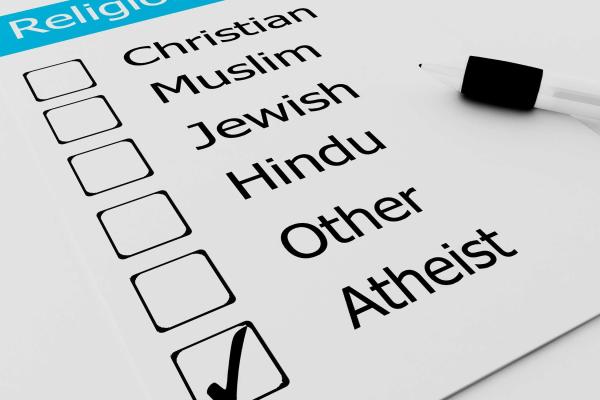
This more recent designation is for those who check the box, when asked about religion, "none." It comprises all of the non-religious including atheists and spiritual.
Atheism
Atheism is the lack of belief in the existence of gods or deities. Atheists generally assert that there is no evidence or convincing argument for the existence of a divine being and therefore do not hold a belief in such entities. The word Atheist tends to have a negative connotation as the religious communities have made it seem as if this group has no values. Quite the opposite is true. Atheists are some of the most active in advocating for human causes and donating to help people in our society. Atheist are caring, kind and the only difference between them and religious people is, they don't believe in religion or need religion to make them value morals.
Symbols:
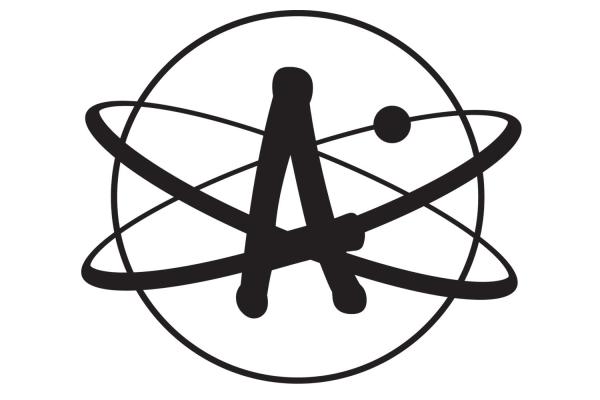
- The Atom: Represents scientific understanding and rational thought.
- The Scarlet A: Popularized by the Richard Dawkins Foundation, symbolizing a positive acknowledgment of atheism.
Agnosticism
Agnosticism refers to the position that the existence or non-existence of gods or ultimate reality is inherently unknowable or beyond human understanding. Agnostics neither affirm nor deny the existence of deities but instead suspend judgment due to a perceived lack of empirical evidence. Agnostics are a growing group across the globe who may still be spiritual, but not believe in religion or ancient doctrine.
Symbols:
- Question Mark: Represents the uncertainty and open-mindedness of agnostic beliefs.
Secularism
Secularism is the principle that government, institutions, and public affairs should be separate from religious influence or control. It advocates for a neutral stance on matters of religion, ensuring that no particular faith is favored or imposed upon individuals.
Symbols:
- The Scales of Justice: Represents fairness, equality, and the unbiased nature of secular governance.
- The Globe: Symbolizes a world where all individuals are free to believe or not believe as they choose.
Humanism
Humanism is a philosophical and ethical worldview that places human well-being, reason, and compassion at its center. It emphasizes the value of human life and the potential for moral and ethical decision-making without reliance on religious dogma.
Symbols:
- The Happy Human: An icon symbolizing humanism, focusing on human welfare and happiness.
- The Humanist H: Represents the Humanist movement and its emphasis on human-centered values.
Skepticism
Skepticism is a critical approach to knowledge and beliefs, often characterized by a tendency to question and examine claims, especially those lacking sufficient evidence. Scientific skepticism is particularly focused on evidence-based inquiry.
Symbols:
- The Magnifying Glass: Represents scrutiny, investigation, and the search for truth.
- The Greek letter Sigma (Σ): Symbolizes summation and analysis, core to skeptical inquiry.
Rationalism
Rationalism is the belief in the importance of reason, logic, and critical thinking as the primary means of acquiring knowledge and forming beliefs. It often prioritizes empirical evidence over faith or intuition.
Symbols:
- The Greek letter Phi (Φ): Represents philosophy and rational thought.
- The Light Bulb: Symbolizes enlightenment and the power of human reason.
Freethought
Freethought is the practice of forming beliefs and making decisions independently, without the influence of religious authorities or dogma. It encourages individuals to rely on reason and evidence to shape their worldviews.
Symbols:
- The Flying Spaghetti Monster (FSM): A parody symbol used to critique the teaching of intelligent design and promote secularism.
- The Open Book: Represents knowledge, education, and the free exchange of ideas.
Existentialism
Existentialism focuses on individual freedom, choice, and subjective experience. It often emphasizes the absence of inherent meaning in life, with individuals tasked with creating their own meaning.
Symbols:
- The Absurd Man: Represents the existentialist idea of embracing the absurdity of life.
- The Ouroboros: A symbol of eternal recurrence and the self-creating nature of human existence.
Pantheism
Pantheism holds that the universe and nature are divine, equating God with the cosmos.
Symbols:
- The Universe Spiral: Represents the interconnectedness and divinity of the cosmos.
- The Tree of Life: Symbolizes the unity of all existence.
Deism
Deism is the belief in the existence of a creator who does not intervene in the universe. Deists typically reject organized religion and the supernatural.
Symbols:
- The Eye of Providence: Represents the watchful eye of a non-intervening creator.
- The Sun: Symbolizes the enlightenment and rational thought that guide deistic belief.
Naturalism
Naturalism posits that everything arises from natural properties and causes, and supernatural or spiritual explanations are not necessary.
Symbols:
- The Green Leaf: Represents life, nature, and the natural world.
- The Tree of Knowledge: Symbolizes growth, knowledge, and the natural order of the universe.
Transhumanism
Transhumanism advocates for the use of technology to enhance human physical and cognitive abilities and improve the human condition.
Symbols:
- The H+ Logo: Represents the enhancement of humanity through technology.
- The Infinity Symbol: Symbolizes the limitless potential of human evolution and improvement.
Stoicism
Stoicism is an ancient Greek philosophy that teaches the development of self-control and fortitude as a means to overcome destructive emotions.
Symbols:
- The Stoic Pillar: Represents strength, stability, and resilience.
- The Laurel Wreath: Symbolizes victory over personal challenges and the cultivation of virtue.
Epicureanism
Epicureanism is a philosophy founded by Epicurus that teaches the pursuit of pleasure and avoidance of pain as the highest good, with an emphasis on simple living and intellectual pursuit.
Symbols:
- The Epicurean Garden: Represents the place where Epicurus taught and symbolizes a life of contemplation and modest pleasure.
- The Cup of Wine: Symbolizes moderate enjoyment and the pursuit of happiness.
Logical Positivism
Logical positivism is a philosophy that asserts that only statements verifiable through direct observation or logical proof are meaningful.
Symbols:
- The Logical Atom: Represents the fundamental building blocks of logical analysis.
- The Vienna Circle: Symbolizes the group of philosophers who developed and promoted logical positivism.
Secular Holidays & Festivals
Secular holidays, also known as non-religious or civic holidays, are holidays that are not typically tied to religious beliefs or traditions. Instead, they often have historical, cultural, or civic significance and are celebrated by a broad range of people, regardless of their religious beliefs. Secular holidays are often observed at the national, regional, or local level and can vary widely from one country to another.
Non-religious people tend to celebrate occasions for people to come together, celebrate shared values, remember historical events, community service, activism, and reflect on important aspects of society and culture. They celebrate some of the common religious holidays in a secular way as these days, such as Christmas and Easter, have become part of our culture.
Non-religious often are not afraid of progress and re-defining holidays such as Thanksgiving to bring new meaning to the day as a family/friends get-together and a time to unite.
Daily Fun & Noteworthy Holidays






Articles and Organizations

Celebrate