Banyan Tree Day
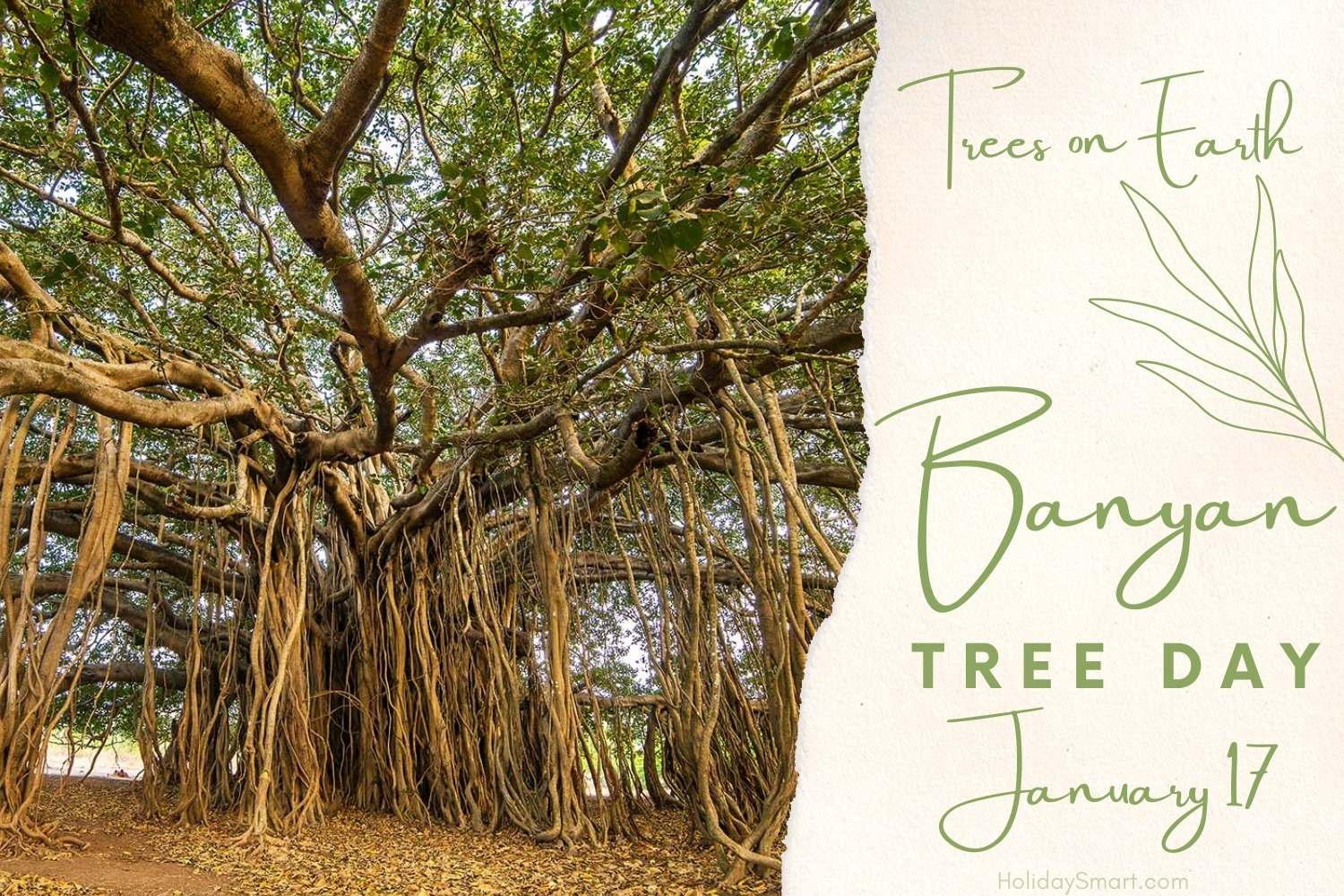
Banyan Tree Day is January 17th
Banyan Tree Day honors one of the most extraordinary trees on Earth. A tree that grows outward instead of simply upward, creating entire living ecosystems from a single seed. This Epic Tree Holiday celebrates the most unique and amazing Trees on Earth.
Celebrated each year on January 17, this holiday recognizes the banyan as a global symbol of shelter, wisdom, longevity, and community. In many cultures, the banyan is not just a tree, it is a gathering place, a landmark, and a living symbol of connection.
The Origins of Banyan Tree Day
Banyan Tree Day was created by Patti Jewel and the HolidaySmart Visionary Team to unite tree lovers worldwide as part of the Trees on Earth Holidays that celebrate one of earths most precious and impressive resources.
Why January 17?
January sits at the beginning of a new year, a time focused on growth, vision, and foundations. Banyan Tree Day reminds us to think expansively. To build networks. To create strong support systems.
Just like the banyan sends down roots to stabilize its spreading branches, we too need grounding as we grow.
All About the Banyan Tree
Banyan trees are one of the most iconic and well-known tree species in the world. Native to India and Southeast Asia, the Banyan Tree (Ficus benghalensis) is a strangler fig tree. These massive trees can grow up to 100 feet tall and have sprawling branches that expands and spreads laterally and often droop down to the ground, giving them a characteristic “banyan” appearance.
The most famous banyan species is Ficus benghalensis, native to India and South Asia. It belongs to the fig family (Ficus genus) and is known for its breathtaking system of aerial prop roots.
Where It Grows
-
India and South Asia
-
Southeast Asia
-
Tropical Africa
-
Hawaii
-
South Florida
-
Other warm tropical regions
Size & Structure
-
Height: 50–80 feet tall
-
Spread: Can extend for acres
-
Lifespan: Often hundreds of years
-
Growth Style: Sends aerial roots from branches downward into the soil. These roots thicken into trunk-like supports, allowing the tree to expand outward indefinitely.
Over time, one banyan tree can resemble an entire forest, yet it remains one organism.
What Makes the Banyan Epic?
🌿 It builds its own forest.
As branches spread, aerial roots drop and form new trunks. What looks like many trees is actually one living network.
🌿 It symbolizes eternity and wisdom.
In India, the banyan is sacred and associated with longevity and divine presence.
🌿 It creates community space.
For centuries, villages gathered beneath banyan trees for meetings, markets, storytelling, and spiritual practice.
🌿 It can begin as a strangler fig.
Some banyans start life high in another tree before establishing themselves independently, a powerful metaphor for growth and transformation.
Famous Banyan Trees
One of the most legendary examples is The Great Banyan in the Acharya Jagadish Chandra Bose Indian Botanic Garden near Kolkata. It covers more than 3.5 acres and looks like a forest of over 3,000 trunks, yet it is a single tree.
Another breathtaking example stands in Lahaina, Maui, planted in 1873. It has grown to cover nearly an entire city block and serves as a beloved community gathering place.
How to Celebrate Banyan Tree Day
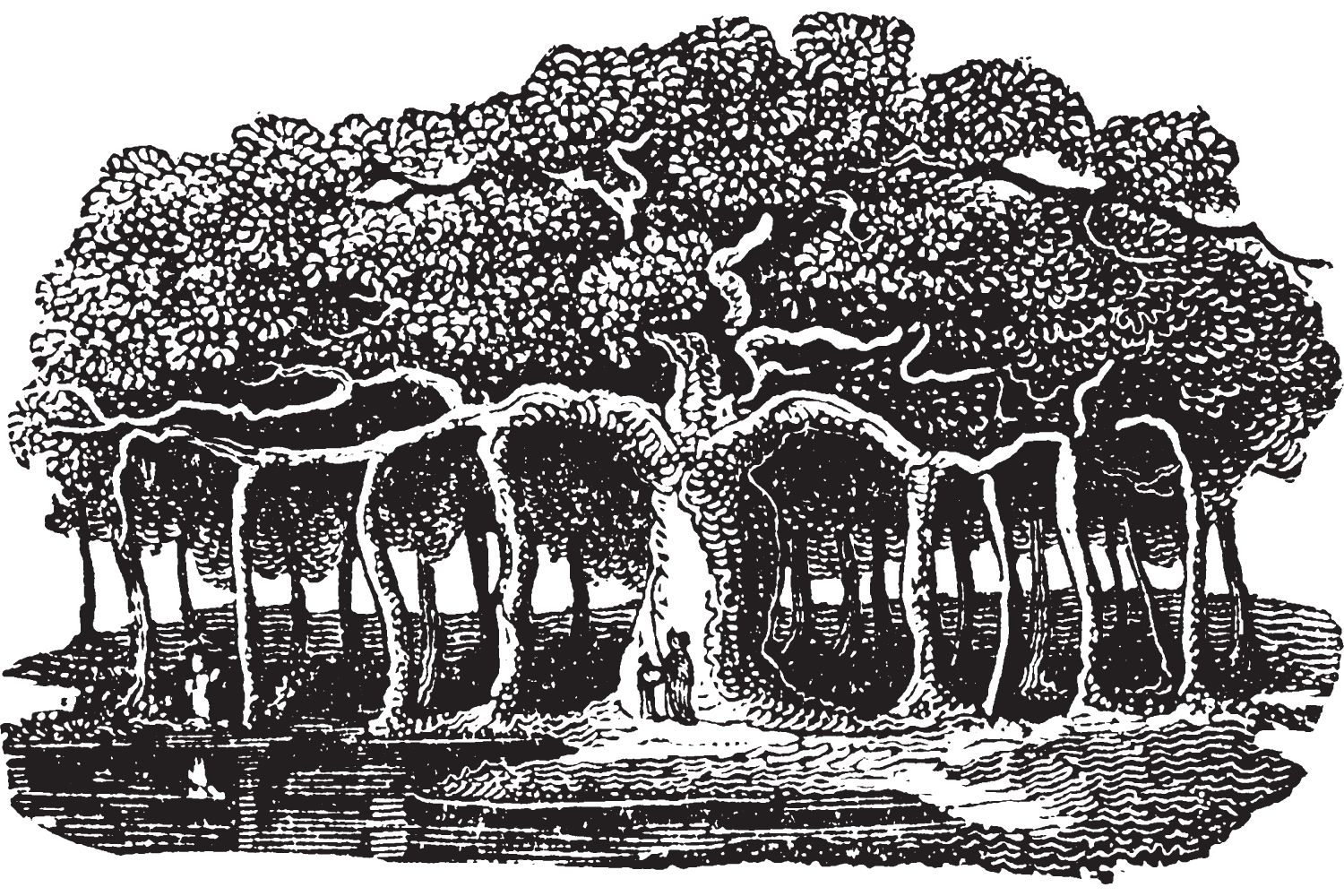
Draw a picture of a banyan tree
Banyan trees are one of the most iconic tree in the world and is super fun to draw! See if you can create a banyan tree and share your drawings.
Have a Banyan Tree contest to see who can take the coolest image
Get your followers involved and have a contest to see who has taken the best banyan tree picture. Take your kids to the park and take pictures of every banyan tree and see who got the best shot.
🌱 Plant for the Future
Banyan Trees are beautiful epic trees that would compliment any yard. Banyan trees are a popular choice for gardeners and landscapers because they can be grown in a variety of settings. They prefer moist, well-drained soil and full sun or partial shade. They can be propagated from seed, but are often grown from cuttings taken from existing trees. Banyan trees can also be transplanted easily, so they are a good option for gardeners who are not sure what type of tree they want to plant.
Once established, banyan trees are very hardy and drought-tolerant. They can tolerate a wide range of temperatures, and can grow in both tropical and temperate climates. They are also resistant to pests and diseases, making them a good choice for those who are not experienced in tree care.
🌳 Visit a Banyan Tree
Today is a great day to get out and see how many of these beautiful trees you can find. Make it a challenge with your friends to find the banyan tree with the largest sprawl with the most lateral branches. Choose a banyan tree at a park and meet your friends or family for a picnic. Invite friends, neighbors, or colleagues to connect in meaningful conversation symbolizing the banyan’s role as a meeting place.
📚 Study Cultural Symbolism
Explore how banyans are viewed in Indian history, spirituality, and folklore. Banyan trees are often considered to be “sacred” trees, and are widely worshipped in many countries. For example, the Banyan Tree, also known as Indian Fig Tree, is considered immortal and an integral part of the myths and legends of India.
They are known for their resilience and ability to survive in difficult environments, and play an important role in the ecology of native habitats. These immense trees provide shelter from the sun and places to gather. Banyan trees are also celebrated for their impressive size and beauty, and are a popular tourist attraction in many parts of the world. They are often featured in parks and gardens, and can be found in many different settings, from urban areas to rural villages.
🧘 Reflect on Your Root System
Journal about your support network. Who are your “prop roots”? Who do you support?
Share images of Banyan Trees on your social media
Share images of the banyan trees around your community or parks.
How Banyan Tree Day Unites People
Banyan Trees have long been a place for communities to gather, enjoying the shade and sprawling branches of the tree. Just seeing a banyan tree draws people toward it. The banyan is a living example of interconnected strength. Each new trunk supports the greater whole. Each root stabilizes expanding growth.
Across continents, people have gathered beneath banyans to solve problems, celebrate milestones, worship, and rest. The tree offers shelter without discrimination. On Banyan Tree Day, we celebrate the power of shared support, the reminder that growth is strongest when it is connected.
Like the banyan, we are not meant to stand alone.
We are meant to grow together.